
A bathroom addition is a great way to increase your property value and improve the convenience and functionality in your home. If you are thinking about adding a new bathroom into your home, then this article can serve as a bathroom addition guide, helping you plan for your upcoming renovation.
Here, we will outline some considerations of building a bathroom addition and the average costs depending on type. We will also discuss other factors that affect cost including building permits, plumbing and electrical requirements, and material selection, all of which will assist in preparing you for the future.
Planning Your Bathroom Addition
When planning how to add a bathroom addition to your home, there are many considerations to take into account, including the type of bathroom you want and where it will be located.
In regard to the type of bathroom, there are a variety of options, such as a full 4-piece bathroom, a 3-piece bathroom, or a powder room. Ultimately, the layout you choose will depend on your needs, whether you’re looking for something for yourself, the kids, or for guests.
As for location, you’ll have to decide if you want to renovate an existing area, like adding a bathroom to the basement or changing an unused closet into a powder room, or create a brand new addition. Figuring out which would be better for you depends on the space available in your home.

How Much Does it Cost to Add a Bathroom in Ottawa?
The following is a bathroom addition cost breakdown based on the type of bathroom you could get:
| Type of Bathroom | Average Starting Cost |
| Powder Room | $8,074 – $10,000+ |
| 3-Piece Bathroom | $14,000 – $20,000+ |
| 4-Piece Bathroom | $17,000 – $26,000+ |
Bathroom type is not the only factor that affects how expensive your addition will be. As such, it is important to be aware of those other factors that can affect the overall bathroom addition cost. These include building permits, plumbing and electrical work, and the materials and finishes selected for the design, all of which will be discussed in more detail below.
Do You Need Building Permits to Add a Bathroom?
Building permits are typically needed if you are making structural changes to your property. However, different municipalities have their own requirements for when a building permit is needed or not.
While creating a new home bathroom addition will most likely involve structural changes, especially if you are building a new area instead of renovating an existing one in your house, it is a good idea to first check your city’s building codes before moving forward. If you do need to obtain a building permit, that is an unavoidable increase to the cost of the addition.
Plumbing and Electrical Requirements for Adding a Bathroom
When it comes to adding a bathroom to your home, the plumbing requirements are arguably the biggest challenge.
Overall, it’s in your best interest to build your new bathroom close to existing water supply and waste lines as this will make the process of connecting your plumbing system to the bathroom easier and less expensive. The more you need to add or rearrange your plumbing, the more work is required and the more expensive costs will be.
Additionally, you will have to assess the capacity of your supply and drainage lines to make sure that they can handle another bathroom. It’s also a good idea to get a plumber to inspect your pipes, checking to see if they are in good condition and will work with new piping before going ahead with the addition. If they are not in good condition, then they will probably need to be repaired or replaced.
For the electrical requirements, every bathroom needs its own ground-fault circuit. As well, a new circuit for the lighting and another one for high-voltage utilities like a hairdryer will be required, and features like heated flooring will need their own circuits too. This will add to the cost, but unfortunately there’s no real way of getting around it.

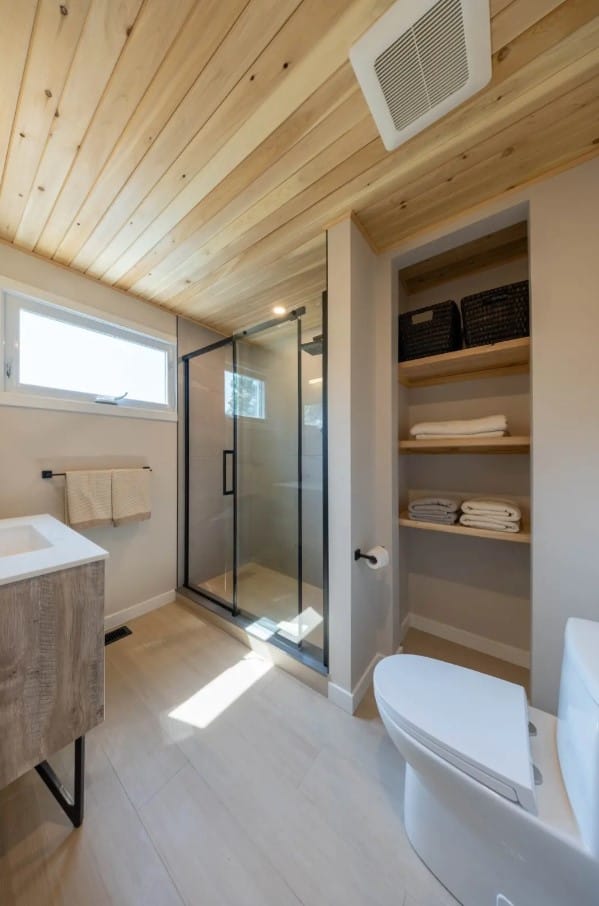
Design and Material Selection for Adding a Bathroom
The type of materials and finishes you select greatly impacts the final bathroom addition price. Choosing luxury or higher-end vanities, flooring, and other such fixtures, will significantly raise the cost of your addition.
If you want ways to save some money and keep costs within budget, look for mid-range materials instead. Mid-range items are still good quality and will help provide the space with a polished look that won’t break the bank at the end of the day.
Conclusion
If you are thinking about incorporating a bathroom addition to your house, it is important to plan carefully.
Consider the type of bathroom you want and where it will be located, whether you have existing space that you can renovate or a new area will need to be constructed. Check whether a building permit is needed, and carefully examine other factors that will affect the final cost, including plumbing and electrical requirements and material selection.
If you decide to move forward with this project, turn to iBathrooms. Our team of experienced contractors is ready to help you create the perfect bathroom. Contact us today for more information!
FAQs

About the Author
Arif
Sales & Customer Experience Lead
Arif is the first friendly face many of our clients meet at iBathrooms. He leads our sales process, handles initial inquiries, and guides homeowners through product selections, ensuring they feel confident and excited about their renovation journey.
Check out more: Your Guide to Bathroom Vanity Light Height